Editorial note: This is an independent guide. It speaks plainly to readers who still hold an old handwritten birth certificate, often for many years. It is not legal advice. Always confirm the current position with Home Affairs or an official source before you act.
A handwritten birth certificate in South Africa is a genuine document, but a computerised or unabridged one is usually asked for. It comes from a time before computerised records, and many modern systems are built for the newer format. Replacement is usually the better step. This guide explains why, and what to do while the replacement is in progress.
What is a handwritten birth certificate?
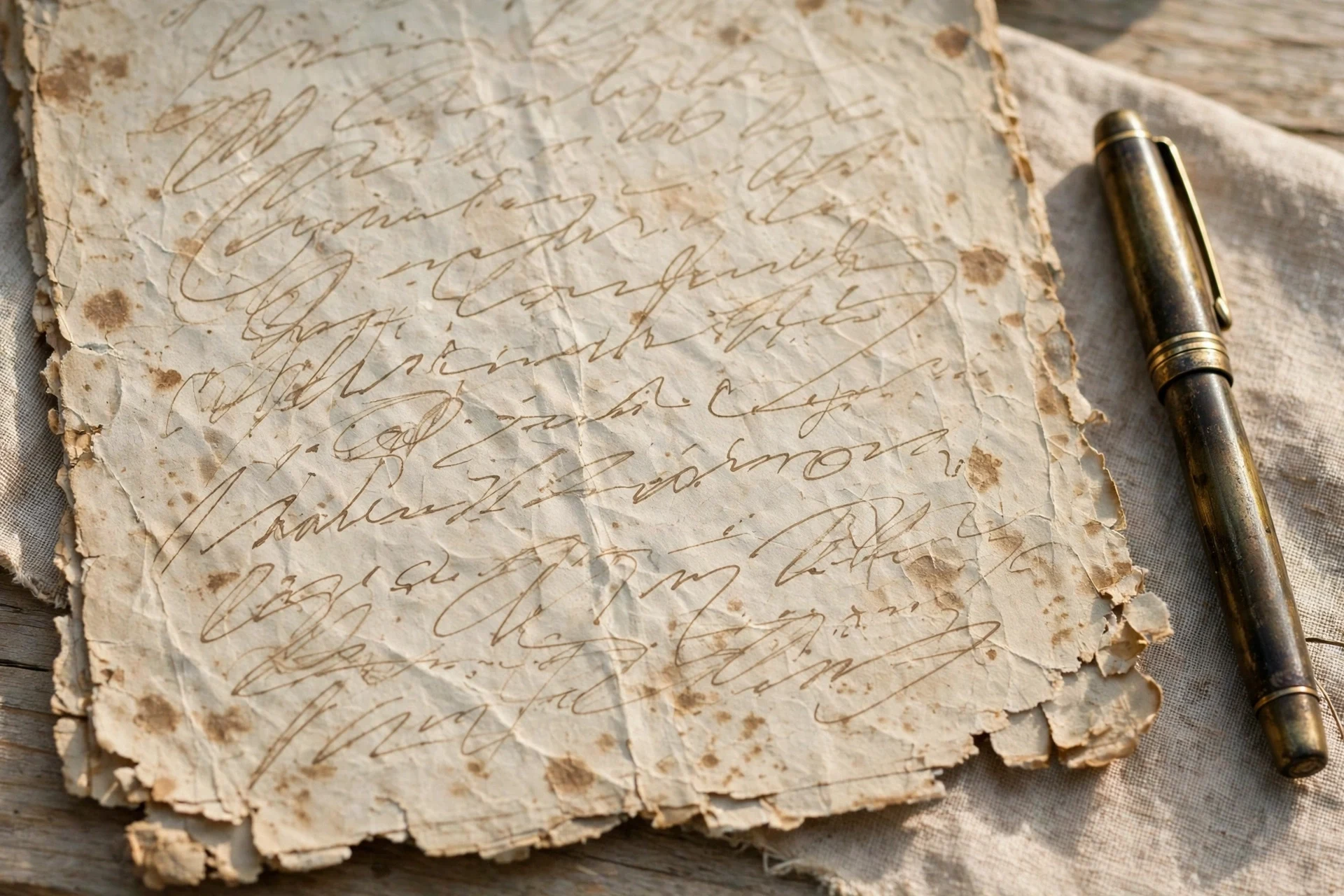
A handwritten unabridged birth certificate in South Africa is a certificate written by hand, from the era before computerised Home Affairs records. The details were written in ink on a paper form, by the registering officer, at the time of registration.
These certificates are common among older South Africans. They were the normal document of their time. They carry the same kind of details as a modern certificate: name, date of birth, place of birth, and parents’ details in the unabridged case. The difference is the format, not the fact of registration.
If you hold one, keep it safe. It is an original record of your birth registration. Even after you get a replacement, keep the old certificate. It can help if any question about your record comes up later.
Is it still accepted? (short answer + where problems arise)
The short answer is: sometimes, but not everywhere. A handwritten birth certificate in South Africa is still a genuine document. Some offices still accept it, especially for simple matters where the certificate is only checked by eye.
Problems arise where the system needs to read, copy, or verify the document electronically. A handwritten entry can be hard to read. A faded entry can be misread. A system built for computerised records may have no field for a handwritten format. That is where delays and refusals happen.
No single rule covers every office. Acceptance depends on the office, the system it uses, and the purpose of the check. That is why the safe step is to replace it with a computerised or unabridged one. Replacement removes the question entirely.
Keep the old certificate even after replacement, how to store it is covered below.
Where a handwritten certificate causes trouble (passport, travel, banks)
Trouble tends to appear in three places: passports, travel, and banks. A passport application can depend on a clean, verifiable birth record. A handwritten certificate can slow that check, or fail it, if the details cannot be read or verified clearly.
Travel is similar. Airlines, visa offices, and border posts work with scanned and checked documents. A handwritten certificate is harder to scan and harder to verify at speed. That can mean extra questions, or a request for a newer document.
Banks are the third place. Their checks follow strict rules about identity documents, so they are covered in their own section below.
Problems at the bank
Banks must verify your identity before they open an account, grant a loan, or release funds. Their checks follow set rules, and their staff follow set document lists. A handwritten certificate may not be on the bank’s accepted list, even if it is genuine.
This does not mean the bank doubts you. It means the bank’s system cannot accept that format. The result is the same for you, though: delay, or a request for a different document.
What the bank asks for
The bank asks for a clear, verifiable identity document. In most cases, that means a modern identity document or a computerised or unabridged birth certificate. Ask the bank exactly which document it will accept, and get that answer before your visit if you can.
Bring your identity document as well as your birth certificate. The more proof you carry, the easier the check. If the bank still refuses the handwritten certificate, ask what alternative it will accept, and ask for that answer in writing.
An alternative document
An alternative document is usually a computerised or unabridged certificate, or a valid identity document. If you hold a green identity book or a smart ID card, the bank may accept that instead for some purposes. For purposes that need a birth certificate itself, the replacement certificate is the answer.
Do not let anyone sell you a shortcut document. Only a Home Affairs certificate counts. Any other paper, however official it looks, will not pass a bank check and may cause legal trouble.
The gap while the replacement is in progress
The gap while the replacement is in progress is the awkward part. Your old certificate may not be accepted, and your new one has not arrived yet. Plan around that gap. Start the replacement early, before you need the document for a bank visit, a passport, or travel.
During the gap, carry the three things listed in the next section. Proof of an application does not replace the certificate, but it shows the office that the matter is in hand.
How to replace it with a computerised/unabridged certificate
This guide does not repeat the general replacement steps. Those steps are covered in full in Birth Certificate Replacement Guide, and the unabridged route is covered in Unabridged Birth Certificate Guide.
In short, you apply to Home Affairs for a replacement, and you ask for the computerised or unabridged format. Take your old handwritten certificate with you, and your identity document. The old certificate helps Home Affairs find your record and match the new certificate to it.
If you are choosing between formats, see Abridged vs Unabridged Birth Certificate Comparison. For most modern uses, unabridged is the safer choice, because it carries parents’ details as well. For a re-issue, DHA’s own birth-certificates page lists the applicant’s identity document as the document required, and it lists no extra proof specific to a handwritten certificate. Take your old certificate and your identity document, and ask the branch if anything more is needed for your case.
What to carry while the replacement is in progress
While the replacement is in progress, carry three things when you visit an office. First, your old handwritten certificate. Second, your identity document. Third, any slip or proof that shows your replacement application is in progress.
Keep copies of all three at home, separate from the originals. If an original is lost while you are out, the copy helps you prove what you held and speed up a fresh application.
Tell the office at the start that a replacement is in progress, do not wait until the end of the visit to mention it. Telling them early lets the staff advise you properly, and it may change which form they ask you to fill in.
If a visit is not urgent, consider waiting until the new certificate arrives. That avoids a wasted trip and a refusal on your record. If the visit is urgent, go with everything you have, and ask clearly what the office will accept.
Handwritten birth certificate South Africa: what replacement costs and how long it takes
Generic re-issue figures on the DHA birth certificates page are R75 for an unabridged birth certificate and R20 for an abridged birth certificate, on re-issue. The applicant’s identity document is required. The DHA ask-us page gives three to eight weeks as the wait for an unabridged birth certificate.
Read those figures with care. They are generic re-issue figures, not a handwritten-specific promise. Your own case may take a different time, and the branch will give you the current position when you apply. The figures help you plan. They do not set a deadline you can hold the branch to.
How to look after the old certificate
Keep the old certificate flat, dry, and out of direct light. Do not fold it into a small pocket if you can avoid it. Folds across handwriting make the writing harder to read later.
Make two clear copies: one to keep at home, and one to carry when you visit an office. A copy is not a substitute for the original, but it helps you prove what you held if the original is lost or damaged.
If the paper is already fragile, handle it as little as you can. Show the copy first when an office only needs to see the details, and bring out the original only when the office asks for it.
Faded, torn, or damaged writing
Do not rewrite anything on the certificate yourself. Do not trace over faded ink, and do not fill in a torn corner. Any change you make by hand can raise doubts about the whole document.
Take the certificate as it is to Home Affairs, with your identity document. Show the damaged part plainly, and explain what happened to it. Home Affairs can advise whether the record can be matched to a new certificate, or whether more detail is needed.
If a name is spelled differently on the old certificate than on your modern documents, say so at the start. Give both spellings, and show where each one appears. A spelling difference explained early is a small matter. One found late can stall a case.
School, work, and estate uses
A readable birth record comes up in more places than passports and banks. A school may ask for it at enrolment. An employer may ask for it as proof of identity. An estate matter may need it to prove a family link.
In each case, ask the office what format it accepts before you visit. A school office may accept the old certificate on sight. An estate office may want the register entry itself, which is a different request, covered in the Vault Copy Birth Certificate Guide.
If you start a replacement only in the week you need the document, you have started too late. Give the process the time the DHA wait figure suggests, and keep your old certificate safe in the meantime.
Frequently asked questions
Is my handwritten birth certificate fake?
No. A handwritten certificate from its era is a genuine document. It was the normal format at the time. The issue is not genuineness. It is that modern systems often ask for a computerised or unabridged format.
Must I replace it, or can I keep using it?
You can keep it, but replacement is better if you still use it for official purposes. A computerised or unabridged certificate is accepted far more widely, and it removes the risk of a refusal at a bank, passport office, or border post.
Will Home Affairs keep my old certificate when I apply?
Ask Home Affairs when you apply. Keep a clear copy of the old certificate before you hand anything over, so you hold a record whatever happens to the original.
Can I travel on a handwritten certificate?
Travel usually needs a passport, not a birth certificate alone, and passport applications usually need a verifiable birth record. A handwritten certificate can slow or block that step, so replace it well before you plan travel.
What if the handwriting on my certificate is faded?
A faded certificate is harder to read and harder to verify. That is a strong reason to replace it. Take it to Home Affairs with your identity document, and follow the replacement route in Birth Certificate Replacement Guide.
Disclosure: This guide is general information only, not legal advice. Acceptance of handwritten certificates varies by office and purpose, so confirm the current position with Home Affairs before you act.